
Sri Lanka is located in the Indian Ocean, close to some of the world’s important shipping routes. This location has helped the country develop an important role in international maritime trade.
Among Sri Lanka’s ports, the Port of Colombo is especially important. It connects shipping networks serving South Asia, the Middle East, East Asia, Europe and East Africa. The Sri Lanka Ports Authority describes Colombo as a major maritime hub in South Asia, with strong connections to international shipping networks.
But what makes Colombo Port so important?
In this article, we look at the location, transshipment activities, facilities and services that make Colombo Port an important part of the Indian Ocean shipping network.
Where Is Colombo Port Located?
The Port of Colombo is located on the western coast of Sri Lanka.
Its position gives it access to major East-West maritime routes across the Indian Ocean. The port’s official location is approximately 6.9514° N latitude and 79.8478° E longitude.
Sri Lanka’s location close to major international sea routes allows vessels travelling between regions such as Asia, the Middle East and Europe to use the country’s ports as part of their shipping networks.
This geographical position is one of the main reasons Colombo has developed into an important transshipment and maritime services centre.
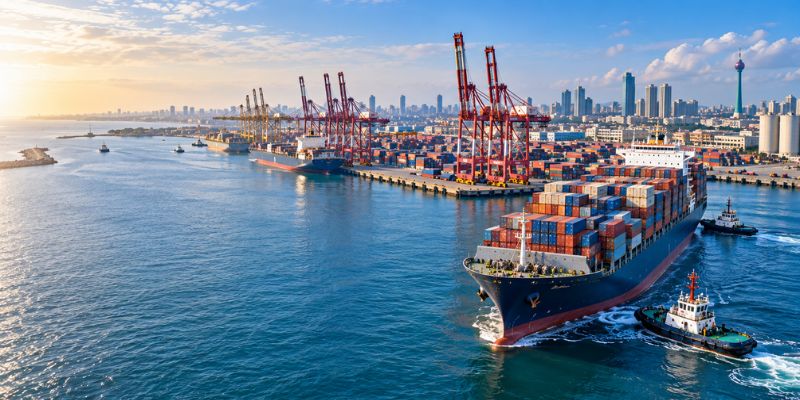
What Is a Maritime Hub?
A maritime hub is a port or location that plays an important role in connecting vessels, cargo and shipping routes.
A maritime hub can provide services such as:
- Container handling
- Transshipment
- Vessel berthing
- Cargo operations
- Bunkering
- Freshwater supply
- Ship supplies
- Technical services
- Crew services
- Waste disposal
- Marine logistics
A strong maritime hub needs more than just a good location. It also needs suitable infrastructure, reliable services, efficient cargo handling and connections to other shipping networks.
Colombo combines these factors to support international vessel operations.
Colombo Port as a Transshipment Hub
One of the most important activities at Colombo Port is container transshipment.
Transshipment happens when cargo is moved from one vessel to another at an intermediate port before reaching its final destination.
For example, a large mainline vessel may bring containers to Colombo. Those containers can then be transferred to another vessel serving a different regional destination.
This makes Colombo an important connection point between international shipping routes and regional markets.
The Sri Lanka Ports Authority reported that Colombo handled 2.915 million TEUs between January and April 2026, an increase of 13.9% compared with the same period in 2025. The authority also stated that transshipment makes up the overwhelming majority of the port’s container throughput.
Colombo’s Strategic Location
Location is one of Colombo Port’s biggest advantages.
Sri Lanka is positioned in the Indian Ocean between major markets and shipping regions. The Port of Colombo is connected to shipping networks serving areas including:
- South Asia
- East Asia
- The Middle East
- Europe
- East Africa
The Sri Lanka Ports Authority states that cargo originating from and destined for Europe, East and South Asia, the Persian Gulf and East Africa can be connected through Colombo Port.
This location allows shipping companies to use Colombo as part of their regional and international routes.
Modern Container Facilities
Another important factor is the port’s container-handling infrastructure.
Colombo has several container terminals supporting international shipping operations. The port has also continued to develop its infrastructure to increase capacity and improve operational efficiency.
In January 2026, the third berth of the Colombo East Container Terminal entered service. The Sri Lanka Ports Authority reported that the terminal had handled more than 500,000 TEUs during 2025 and that the additional berth would increase operational capacity.
Continued infrastructure development is important because global shipping requires ports to handle increasingly large volumes of cargo efficiently.
Strong Connections to International Shipping Networks
A maritime hub needs good connections with shipping lines and feeder services.
Colombo has connections with international mainline and feeder networks. According to the Sri Lanka Ports Authority, these networks connect Colombo with markets across East Asia, South Asia, the Middle East, Africa and Europe.
This connectivity helps move containers between major international routes and regional destinations.
For shipping companies, strong connectivity can make a port useful not only for direct cargo handling but also for wider regional distribution.
Services Supporting Vessels at Colombo Port
Container handling is only one part of a successful port operation.
Vessels may require many additional services during a port call. These can include:
Ship Supplies
Ships need food, beverages, consumables and other stores for their crew and operations.
Reliable ship supply services help vessels receive their required provisions during their stay.
Freshwater Supply
Freshwater is an important requirement for vessels and their crews.
Marine service providers can coordinate freshwater delivery according to the vessel’s requirements and port procedures.
Bunker Fuel
Vessels also require fuel for their operations. Bunker fuel supply needs to be properly planned and coordinated to fit the vessel’s schedule.
Crew Change
Crew members may join or leave vessels while they are in port.
Crew change operations can involve transportation, airport transfers, accommodation and immigration-related arrangements.
Spare Parts
A vessel may require spare parts or equipment while it is in port.
Ship spare clearance and delivery services can help coordinate customs procedures, transportation and delivery to the vessel.
Technical Support
Mechanical, electrical or other technical problems may require attention during a port stay.
Local technical support can help coordinate qualified technicians and repair services.
Waste Disposal
Vessels also need suitable arrangements for garbage and sludge disposal.
Proper coordination helps vessels manage waste according to applicable port requirements.
These services form an important part of the wider maritime support system around Colombo Port.
Why Port Services Matter to Vessel Operators
A vessel’s time in port is valuable.
Delays in receiving supplies, arranging crew movements, obtaining spare parts or completing technical work can affect the vessel’s schedule.
This is why vessel operators often work with local maritime service providers that can coordinate different requirements during a port call.
A local service provider can help with:
- Communication with local service providers
- Vessel supply coordination
- Crew support
- Freshwater arrangements
- Technical assistance
- Spare parts delivery
- Waste disposal
- Other port-call requirements
Efficient coordination can help make the port call smoother and reduce unnecessary delays.
Colombo Port and Sri Lanka’s Maritime Industry
The importance of Colombo Port extends beyond container handling.
The port supports a wider maritime ecosystem that includes shipping companies, freight forwarders, logistics providers, terminal operators, ship agents, marine service companies and other businesses.
The Sri Lanka Ports Authority has stated that continued investment in capacity, technology and infrastructure is important for strengthening Colombo’s role in international shipping.
This development can also create opportunities for supporting industries such as marine logistics, ship supply, ship husbandry and vessel support services.
Colombo Port for International Vessels
For an international vessel calling at Colombo, the port call can involve many different requirements.
Depending on the vessel and its schedule, these may include:
- Vessel arrival coordination
- Berthing arrangements
- Cargo operations
- Ship supplies
- Freshwater
- Bunker fuel
- Crew services
- Spare parts
- Technical assistance
- Waste disposal
- Departure coordination
Having access to reliable local support can make it easier to coordinate these requirements.
The Role of Local Maritime Service Providers
Port infrastructure is important, but vessels also need reliable services around the port.
Companies providing maritime services in Sri Lanka can help ship owners, ship managers, operators and charterers coordinate the practical requirements of a vessel’s port call.
Heraclion International provides ship husbandry and vessel support services at major Sri Lankan ports, including Colombo, Hambantota, Galle and Trincomalee.
Its services include ship provisions and stores, freshwater supply, bunker fuel supply, crew change support, spare parts clearance and delivery, technical support, medical assistance and garbage and sludge disposal.
This type of support helps connect vessel operators with the local services they need during a port call.
Why Colombo Port Is Important to the Indian Ocean
Several factors contribute to Colombo Port’s importance:
Strategic location
Colombo is positioned close to major Indian Ocean shipping routes.
Transshipment activity
A large share of Colombo’s container operations is connected to transshipment.
International connectivity
The port connects shipping networks serving several major regions.
Container infrastructure
The port continues to develop its terminals and handling capacity.
Marine services
Vessels can access a wide range of supporting services during port calls.
Continued development
Infrastructure and operational improvements are being pursued to support future growth.
Together, these factors make Colombo an important part of the regional maritime network.
Conclusion
The Port of Colombo plays an important role in connecting international shipping networks across the Indian Ocean and South Asia.
Its strategic location, strong transshipment activity, container facilities and connections to international shipping routes have helped establish Colombo as an important maritime hub.
For vessels calling at Colombo, reliable support services are also an important part of a successful port visit. From ship supplies and freshwater to crew changes, technical support, spare parts and waste disposal, these services help vessels manage their operational requirements.
As Colombo continues to develop its infrastructure and capacity, its role in regional and international maritime trade is expected to remain important.
Need Maritime Support at Colombo Port?
Heraclion International provides ship husbandry and maritime support services in Sri Lanka, helping vessels coordinate essential requirements during their port calls.
From ship supplies and freshwater to crew support, technical assistance, spare clearance and waste disposal, our team can assist with your vessel’s requirements.
Contact Heraclion International to discuss your vessel’s requirements at Colombo Port.